About PlastLink
Established in 2018, PlastLink Chain Belt manufactures modular belts, conveyor chains, sprockets, rollers, and industrial material handling solutions backed by 10 to 15 years of industry experience.
Plastic Modular Belt Manufacturers in India
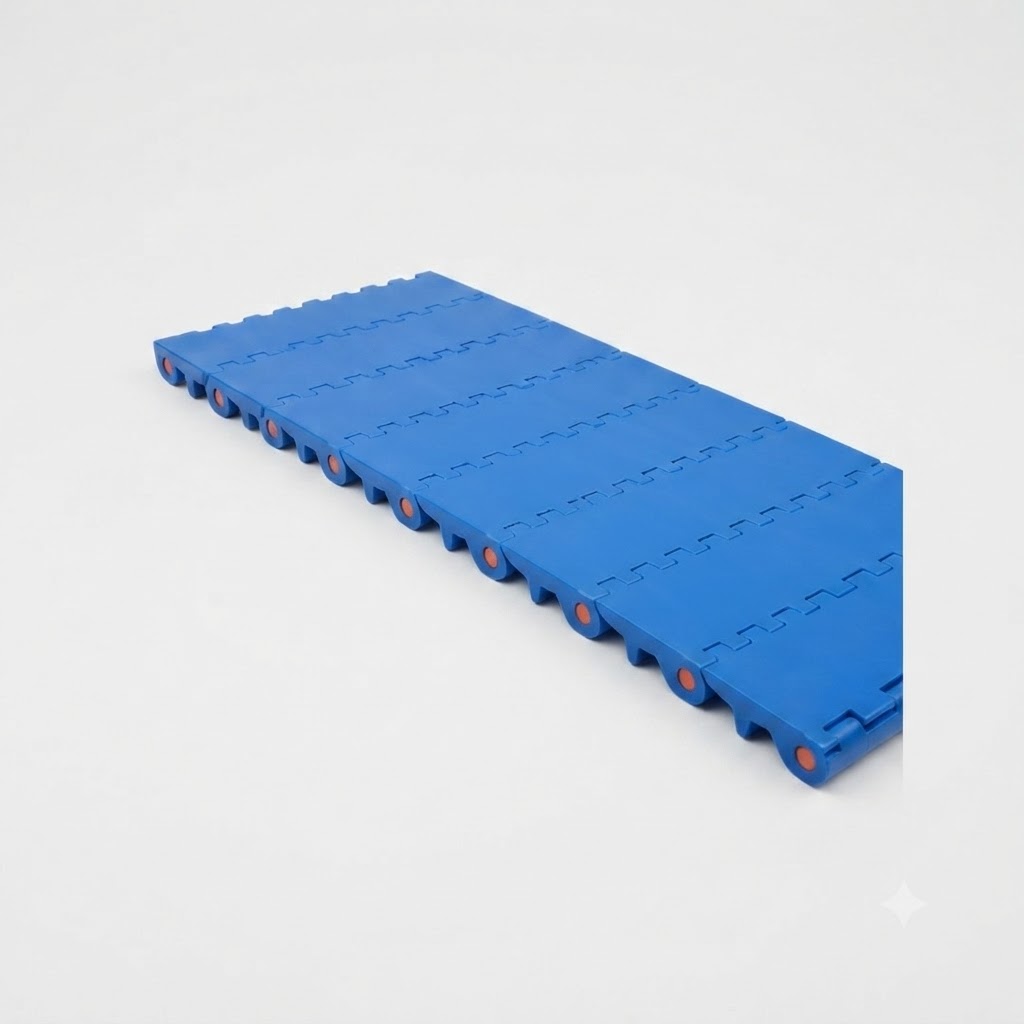


Plastlink Chain Belt is leading Plastic Modular Belt Manufacturers, Suppliers, Traders and Exporters in India. We understand that businesses require conveying components that are durable, hygienic, and easy to maintain. Our modular plastic conveyor belts are engineered using premium-grade polymers such as polypropylene, polyethylene, and acetal (POM).
Our belts are built to handle continuous operation across food processing, packaging, and material handling industries without compromising on performance.
Our team focuses on delivering products that combine strength with flexibility, ensuring that every plastic conveyor belt we produce offers smooth, positive-drive movement with minimal noise and vibration.
What is Plastic Modular Belt and how does it work?
A plastic modular belt is a continuous conveyor belt made of interlocking plastic segments joined by hinge rods, arranged in a brick-like pattern. It functions using a positive drive system where grooved wheels (sprockets) engage directly with the belt's underside to pull it forward, eliminating slippage and mistracking.
Because it operates on a "Lego-like" design, a plastic modular belt provides several unique benefits and mechanisms:
- Easy Repair If a section is damaged, you do not need to replace the entire belt. You simply remove the connecting rods, pop out the broken modules, and snap in new ones.
- Layout Flexibility By using specialized hinge patterns, modular belts can travel smoothly around corners, inclines, and declines without collapsing or bunching up.
- Low Maintenance Unlike traditional rubber or fabric belts, modular belts do not rely on high-tension friction to move. This puts less strain on the conveyor's motor and bearings.
- Extreme Durability Made from thermoplastics like polyethylene (PE), polypropylene (PP), or acetal (POM), they resist chemicals, moisture, and extreme temperatures (from -70°C to 240°C).
- Sanitation They are easily washed down and sanitized, making them the industry standard for food and pharmaceutical processing.
Manufacturing process of plastic modular belt
- Material Preparation Thermoplastic pellets are dried to remove moisture and then blended with additives (colorants, UV stabilizers, or anti-static agents) to meet specific application requirements (like food safety or static dissipation).
- Injection Molding The prepared plastic resin is heated to its melting point and injected under high pressure into steel injection molds. The molds form the highly precise, intricate shapes of the belt modules—which include:
- Hinge eyes/loops: Where the rods will slide through.
- Bottom drive teeth: Used to engage directly with drive sprockets.
- Optional accessories: Some modules are molded with integrated side guards, cleats, or friction tops.
- Cooling and Curing The molds are rapidly cooled (often with circulating water) to solidify the plastic modules. Once hardened, the molds open, and an automated robotic arm or ejector pins release the finished modules.
- Secondary Machining and Trimming While the injection molding process yields highly precise parts, modular pieces may undergo finishing processes. Flash (excess plastic) is mechanically trimmed. Holes for hinge rods are deburred to ensure rods fit smoothly.
- Assembly and Rod Insertion The individual molded modules are laid out on a flat assembly table in a staggered, brick-like pattern to ensure structural strength. Workers align the interlocking hinge loops from row to row and insert continuous hinge rods (made from rigid plastics or stainless steel) down the entire width of the belt to link the modules securely.
- Quality Control and Packaging The finished, continuous belt is tested for tensile strength, flexibility, and dimensional accuracy. Belts are often coiled on industrial spools or packaged in custom continuous lengths, ready for installation on production and packaging lines.
Features of Plastic Modular Belt
As Plastic Modular Belt Manufacturers in India, we have advanced features that ensure high precision, durability, and consistent performance.
- Modular Interlocking Design The belt is built from individual plastic modules connected by rods, allowing quick assembly, easy repair, and simple section replacement without changing the entire belt.
- Positive Drive Mechanism Powered by a compatible sprocket system, the belt moves with accurate, low-noise, and low-vibration operation, ensuring smooth and predictable conveying.
- Corrosion and Chemical Resistance Manufactured from polypropylene, polyethylene, or acetal, the belt resists moisture, chemicals, and washdown conditions common in food and industrial settings.
- Open and Flush Grid Options Available in open grid, flush grid, and perforated styles, the belt supports drainage, airflow, and cooling needs across multiple processing applications.
- High Load-Bearing Capacity Engineered for heavy-duty use, the belt maintains structural strength and flat running stability even under continuous, high-volume operating conditions.
Benefits of Plastic Modular Belt
As Plastic Modular Belt Suppliers in India, our products provide several benefits including consistent quality, smooth finish, and long service life.
- Long Operational Life Thanks to durable thermoplastic construction, the belt withstands wear, abrasion, and repeated use, reducing replacement frequency and lowering long-term costs.
- Hygienic and Easy to Clean The open module structure prevents debris buildup, making it ideal for food-grade applications that require frequent sanitation and washdown cycles.
- Reduced DowntimeBecause individual modules can be replaced without dismantling the entire belt, maintenance is faster, minimizing production interruptions and operational losses.
- Energy-Efficient Operation The positive drive design reduces slippage and friction, allowing motors to run efficiently and consume less power during continuous operation.
- Customizable Configurations With options like raised rib, radius, and side-flexing designs, the belt adapts to curved paths, inclines, and specialized handling requirements easily.
Applications of Plastic Modular Belt
As Plastic Modular Belt Traders in India, our all types are used in various types of industrial sectors such as:
- Fruit Conveyor Belt Used in fruit sorting and packing lines, the belt gently transports produce while allowing juice and debris to drain through open grids.
- Vegetable Conveyor Belt Ideal for washing and sorting vegetables, the belt handles wet environments effectively while maintaining hygiene throughout the processing line.
- Food Processing Conveyor Belt Supports various food handling stages, from raw material intake to finished packaging, while meeting strict food-safety and sanitation standards.
- Beverage Conveyor Belt Transports bottles and containers smoothly through filling and capping stations, resisting spills, moisture, and frequent washdown cycles.
- Bakery Conveyor Belt Handles delicate baked goods during cooling, packaging, or transport stages without damaging product texture or shape.
- Dairy Conveyor Belt Moves dairy products through processing and packaging lines while withstanding cold temperatures and frequent cleaning routines.
- Meat Processing Conveyor Belt Built to endure heavy use and strict hygiene protocols, the belt supports safe and efficient meat handling operations.
- Packaging Conveyor Belt Assists in moving packaged goods through labeling, boxing, and sealing stages with consistent speed and alignment.
- Pharmaceutical Conveyor Belt Used in controlled environments, the belt supports precise, contamination-free movement of pharmaceutical products during production.
- Sorting Conveyor Belt Enables efficient product sorting and classification in distribution centers, warehouses, and automated packaging systems.
Why Choose Us?
As one of the leading Plastic Modular Belt Exporters in India, we deliver premium-quality solutions designed to meet diverse industrial requirements. Here's why we stand out:
- Proven Manufacturing Expertise We bring years of hands-on experience in producing reliable plastic modular conveyor systems for diverse industries.
- Food-Grade Quality Standards Our belts comply with hygiene and safety regulations, making them suitable for sensitive food and beverage applications.
- Wide Product Range From open grid to flat top and radius belts, we offer configurations to match nearly any conveying requirement.
- Custom Engineering Support Our technical team works closely with clients to design belts suited to specific loads, speeds, and layouts.
- Reliable After-Sales Service We provide ongoing support, spare modules, and sprockets to keep your conveyor systems running smoothly.
Choose Plastlink Chain Belt Belt is leading Plastic Modular Belt Manufacturers, Suppliers, Traders and Exporters in India. We remain committed to delivering Plastic Modular Belt solutions that combine durability, hygiene, and efficient performance for industries that cannot afford downtime. Our continuous investment in quality materials and precision engineering allows us to serve sectors ranging from food processing to pharmaceuticals with confidence. When you choose us, you are choosing a manufacturing partner dedicated to keeping your conveying operations smooth, safe, and productive for years to come.
FAQ’s
They are typically made from polypropylene, polyethylene, or acetal (POM), chosen based on the application's chemical, temperature, and load requirements.
Yes, most modular belts are food-grade certified and designed for easy cleaning, making them ideal for food, beverage, and dairy processing lines.
Unlike rubber belts, modular belts use interlocking plastic modules that allow section-wise repair, better drainage, and positive-drive movement without slippage.
Yes, side-flexing and radius belt designs are specifically engineered to move smoothly along curved or angled conveyor layouts.
Regular cleaning, sprocket inspection, and timely replacement of worn modules help extend the belt's operational life significantly.