About PlastLink
Established in 2018, PlastLink Chain Belt manufactures modular belts, conveyor chains, sprockets, rollers, and industrial material handling solutions backed by 10 to 15 years of industry experience.
Plastic Modular Chain Manufacturers in India
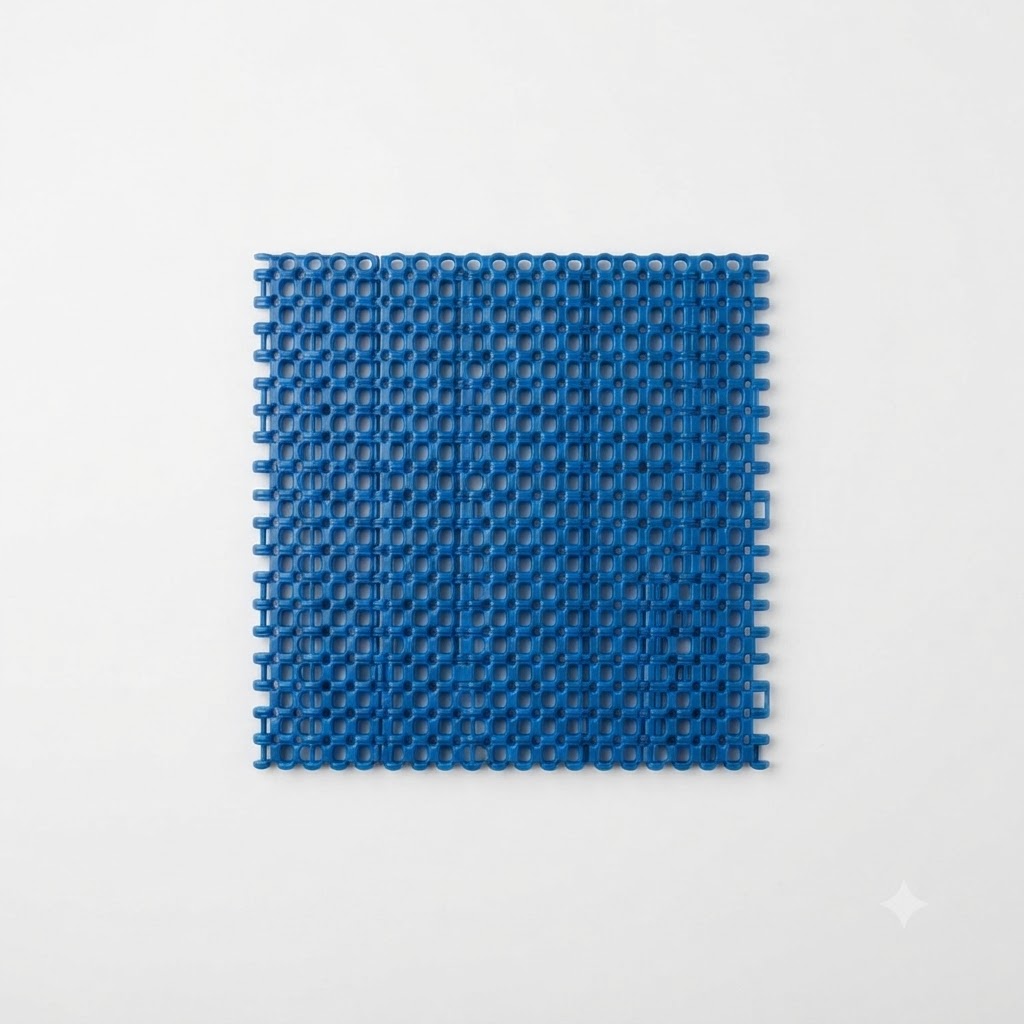


Plastlink Chain Belt is leading Plastic Modular Chain Manufacturers, Suppliers, Traders and Exporters in India. Our plastic chain is built from individually linked modules that snap together to form a continuous, driven loop, giving operators the durability of a chain with the flexibility of a modular structure.
From flat top and open grid patterns to side-flexing and radius designs, we build our plastic conveyor chain to move products in straight paths, around curves, or through transfer points without losing alignment.
We provide heavy-duty and high-load variants for sectors like recycling, textiles, and agriculture, where the chain faces constant abrasion and mechanical stress.
What is Plastic Modular Chain and how does it work?
A plastic modular chain is a versatile conveyor belt made of interlocking plastic segments (modules) connected by hinge rods. It acts like a flexible, continuous chain rather than a traditional flat belt. It is highly customizable, resists wear, and is easily repairable.
How It Works
- Interlocking Design: Individual plastic pieces are linked together like a puzzle to form a seamless, moving surface.
- Sprocket Drive: Instead of using flat rollers, the system uses toothed gears (sprockets) that engage with the underside of the chain to pull it. This "positive drive" completely eliminates belt slipping and tracking problems.
- Layout Flexibility: Because of the hinged design, the chain can bend, twist, and travel around curves or up inclines on a single, continuous motor.
Manufacturing process of Plastic Modular Chain
- 1. Raw Material Selection: High-performance engineering thermoplastics are selected based on the end-use environment. Common materials include:
- Polyacetal (POM): Provides high tensile strength, low friction, and excellent wear resistance.
- Polypropylene (PP): Ideal for chemical resistance and high-temperature washdowns.
- 1. Injection Molding (Module Production) The core manufacturing step is injection molding
- Melting: Plastic pellets are fed into an injection molding machine, heated to molten state (200°C to 250°C), and injected under high pressure into precision-machined steel molds.
- Cooling:The mold, which dictates the complex geometry (interlocking hinge eyes, teeth, and surface patterns), is cooled.
- Ejection: The solidified plastic module is ejected.
- Extrusion (Hinge Pins) While the modules are molded, the connecting hinge pins are typically manufactured via continuous plastic extrusion (or sometimes drawn stainless steel for heavy-duty chains)
- Chain Assembly Modules are arranged in a staggered or "brick-wall" pattern to provide inherent structural strength
- Interlocking: The hinge eyes of the modules from one row align with the spaces in the adjacent row.
- Pin Insertion: The extruded hinge pins are pushed through the aligned channels to connect the rows.
- 5. Quality Control and Testing: Finished chains undergo rigorous testing, including checks for tensile strength, uniform chain pitch (spacing between links), pin alignment, and wear resistance.
Features of Plastic Modular Chain
As Plastic Modular Chain Manufacturers in India, we have advanced features that ensure high precision, durability, and consistent performance.
- Individually Linked Modules: Each chain segment connects through pivot pins, enabling localized flexing and simple link-by-link replacement when needed.
- Multiple Pattern Options: Available in flat top, open grid, and flush grid patterns, suited to different product types and drainage needs.
- Material Range for Strength: Manufactured in polypropylene, acetal, and POM, offering varying levels of rigidity, flexibility, and chemical resistance.
- Transfer-Point Compatibility: Designed to move smoothly across conveyor transfer junctions, supporting multi-stage handling and sorting operations.
- Abrasion-Resistant Build: Reinforced link construction withstands friction from repeated cycling, making it suitable for demanding industrial use.
Benefits of Plastic Modular Chain
As Plastic Modular Chain Suppliers in India, our products provide several benefits including consistent quality, smooth finish, and long service life.
- Reduced Chain Fatigue: Pivot-pin construction distributes mechanical stress evenly, helping the chain resist premature wear during long shifts.
- Fast Link Replacement: Damaged sections can be removed and replaced at the link level, avoiding costly full-chain changeovers.
- Smooth Transfer Handling: The chain's flexible joints allow products to move seamlessly between conveyor sections without jamming or misalignment.
- Lower Friction Operation: Plastic-on-plastic contact reduces drag compared to metal chains, easing the load on drive motors over time.
- Corrosion-Free Performance: Since the chain is plastic rather than metal, it avoids rust and degradation in humid or washdown environments.
Applications of Plastic Modular Chain
As Plastic Modular Chain Traders in India, our all types are used in various types of industrial sectors such as:
- Plastic Modular Chain for Conveyor Systems Forms the core driving component in multi-section conveyors requiring consistent product transfer.
- Plastic Modular Chain for Food Processing Moves food items through preparation and packing lines while resisting moisture and residue buildup.
- Plastic Modular Chain for Packaging Supports steady product flow through wrapping, labeling, and carton-loading stages of packaging lines.
- Plastic Modular Chain for Bottling Lines Handles bottles and containers through filling and capping stations with reliable, non-slip movement.
- Plastic Modular Chain for Beverage Industry Transfers cans and bottles across production stages while withstanding frequent washdown cycles.
- Plastic Modular Chain for Bakery Carries baked items through cooling and packaging phases without disturbing their shape or surface.
- Plastic Modular Chain for Dairy Moves dairy containers through processing lines while tolerating cold storage and cleaning routines.
- Plastic Modular Chain for Material Handling Transfers bulk goods and components across warehouse and logistics operations efficiently.
- Plastic Modular Chain for Assembly Lines Keeps parts and products moving between workstations during manufacturing processes.
- Plastic Modular Chain for Sorting Systems Assists automated sorting equipment by carrying items to designated exit points accurately.
Why Choose Us?
As one of the leading Plastic Modular Chain Exporters in India, we deliver premium-quality solutions designed to meet diverse industrial requirements. Here's why we stand out:
- Precision Link Engineering: Our chains are designed for accurate pivot movement, reducing wear points and improving long-term reliability.
- Industry-Specific Material Selection: We help clients choose the right chain material based on load, chemical exposure, and hygiene needs.
- Support Across Logistics and Manufacturing: Our chains serve warehouses, recycling plants, textile mills, and agricultural operations alike.
- Compatibility-Focused Supply: We provide chains alongside matching sprockets and drive components to avoid installation mismatches.
- Ongoing Technical Assistance: Our team remains available for chain sizing queries, spare link supply, and maintenance guidance.
Choose Plastlink Chain Belt Belt is leading Plastic Modular Chain Manufacturers, Suppliers, Traders and Exporters in India. We offer Plastic Modular Chain systems that give industries a durable, low-maintenance alternative to traditional metal chain conveying. By combining flexible link design with a wide range of material options, we help businesses across food, logistics, and manufacturing sectors keep their production lines running smoothly. Partnering with us means working with a team that understands chain performance from the first link to the last.
FAQs
A chain is built from pin-connected links designed for driving force and transfer points, while a belt uses broader interlocking modules for surface transport.
Polypropylene, polyethylene, acetal, and POM are the most common materials, chosen based on strength and chemical resistance needs.
Yes, heavy-duty and high-load variants are reinforced to manage demanding conditions found in recycling, manufacturing, and logistics settings.
Yes, many chain variants are designed for frequent washdown cycles, resisting moisture damage and supporting hygienic operations.
Chain pattern selection depends on product type, drainage needs, and conveyor layout, and our team can help identify the right fit.