About PlastLink
Established in 2018, PlastLink Chain Belt manufactures modular belts, conveyor chains, sprockets, rollers, and industrial material handling solutions backed by 10 to 15 years of industry experience.
PVC Conveyor Belt Manufacturers in India
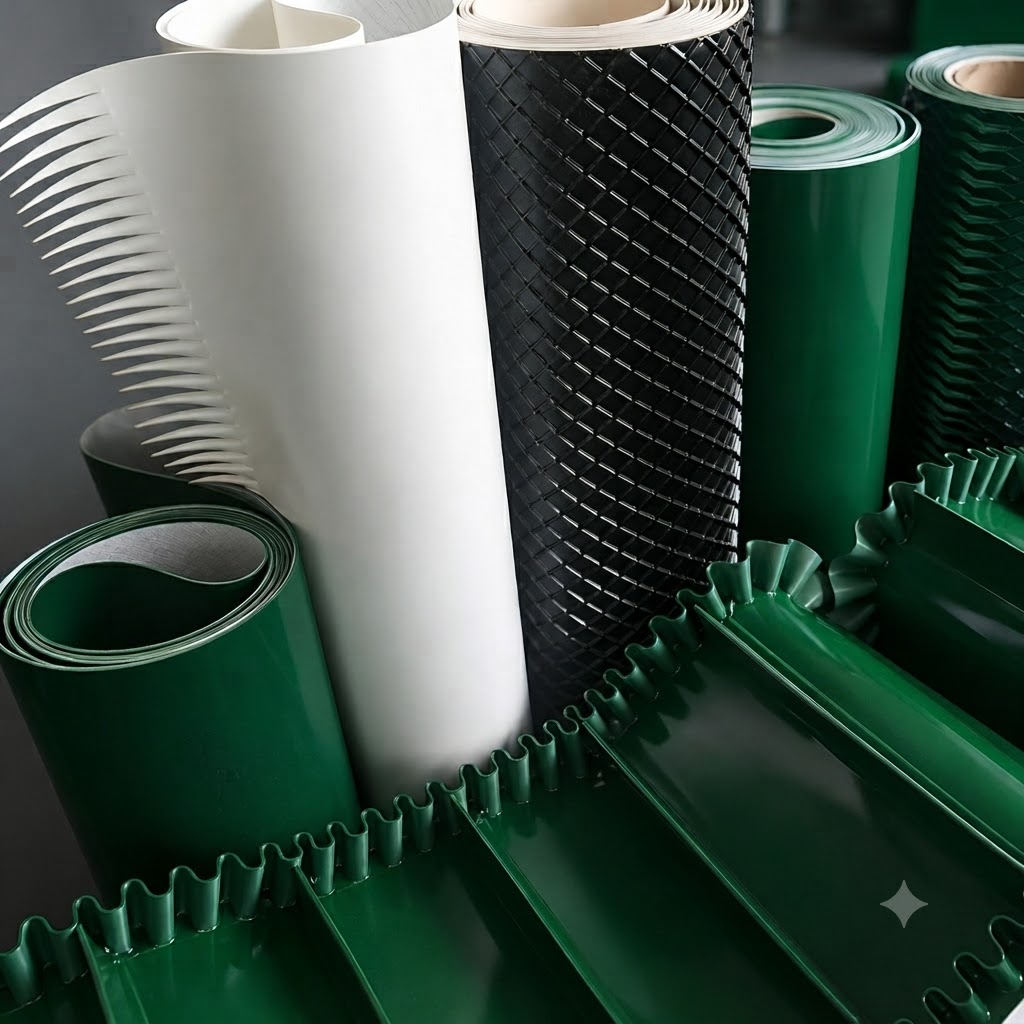


Plastlink Chain Belt is leading PVC Conveyor Belt Manufacturers, Suppliers, Traders and Exporters in India. Our belts are built with fabric reinforcement, typically polyester or cotton, coated in PVC layers that are calendered and pressed to form a smooth, jointless, and durable belting surface. This construction allows us to serve industries where flat, flexible, and lightweight conveying is preferred over rigid modular systems.
Our product range covers single, double, and multi-ply belts, along with specialized finishes such as rough top, cleated, sidewall, and ribbed profiles for inclined or bulk material transport.
We also produce anti-static, oil-resistant, chemical-resistant, and flame-resistant variants for facilities with specific safety or handling requirements, along with food-grade options for operations where hygiene compliance is non-negotiable.
What is PVC Conveyor Belt and how does it work?
A PVC (Polyvinyl Chloride) conveyor belt is a durable, flexible material-handling belt made by coating a synthetic fabric core (like polyester or nylon) with PVC plastic. It is widely used in industries like food processing, logistics, and pharmaceuticals due to its resistance to chemicals, moisture, and wear.
How It Works
- Drive Mechanism: The belt loops continuously around a series of rollers or pulleys. A motorized pulley generates friction and drives the continuous loop forward.
- Fabric Core: The inner core of the belt bears the tensile load, which prevents the belt from stretching or snapping under the weight of transported goods.
- PVC Surface: The outer PVC coating provides a smooth, non-porous, or patterned surface that protects the core, resists abrasion, and can be easily sanitized.
- Material Transport: Items placed at the infeed (loading) end are carried along the moving surface and discharged at the outfeed end.
Manufacturing process of PVC Conveyor Belt
- 1. PVC Compounding and Preparation: The process begins by mixing PVC resin with specific additives such as plasticizers, stabilizers, and pigments to determine final hardness, flexibility, and resistance properties.
- 2. Fabric Preparation (The Carcass): The inner core of the belt provides tensile strength and structural support, made of synthetic fibers like polyester or nylon woven into canvas layers.
- 3. Coating and Impregnation: Manufacturers apply the PVC compound to the fabric core using one of three primary methods:
- Coating Method: Liquid or paste PVC is continuously spread onto the fabric using an automated coating machine. This is the most common method for light industrial belts.
- Rolling/Calendaring Method: Softened PVC sheets are pressed onto the fabric using large heated rollers.
- 4. Heating and Plasticization: The coated fabric passes through a high-temperature oven, melting the PVC and fusing the fabric and plastic layers into a continuous, solid structure.
- 5. Cooling and Surface Texturing: Once fused, the belt passes through cooling rollers or water baths to solidify the PVC. While the plastic is still semi-malleable, it passes through an embossing or texturing machine.
Features of PVC Conveyor Belt
As PVC Conveyor Belt Manufacturers in India, we have advanced features that ensure high precision, durability, and consistent performance.
- Multi-Ply Fabric Construction: Built with polyester or cotton layers coated in PVC, offering adjustable strength based on single, double, or multi-ply design.
- Jointless and Endless Options: Available as heat-welded endless belts or open rolls, providing flexibility for different installation and machinery needs.
- Surface Finish Variety: Offered in smooth, rough top, cleated, ribbed, and sidewall profiles to match inclined or bulk material handling requirements.
- Resistance-Enhanced Grades: Manufactured in oil, heat, chemical, and abrasion-resistant variants for demanding industrial operating conditions.
- Lightweight Flexible Structure: Significantly lighter than rubber or metal belting, making installation, handling, and machine loading noticeably easier.
Benefits of PVC Conveyor Belt
As PVC Conveyor Belt Suppliers in India, our products provide several benefits including consistent quality, smooth finish, and long service life.
- Cost-Effective Conveying: PVC belting offers a more economical option compared to rubber or PU alternatives, without sacrificing daily performance.
- Easy Installation and Handling: The lightweight structure reduces effort during belt replacement, machine setup, and general handling on the floor.
- Reliable Hygiene Compliance: Food-grade and easy-clean variants support sanitation requirements in sensitive processing environments.
- Reduced Downtime Risk: Jointless, heat-welded belts minimize the chances of seam failure, keeping production lines running without interruption.
- Adaptable Surface Options: Cleated and sidewall profiles allow the belt to handle inclines and loose materials that flat belts cannot manage.
Applications of PVC Conveyor Belt
As PVC Conveyor Belt Traders in India, our all types are used in various types of industrial sectors such as:
- PVC Conveyor Belt for Food Processing Moves food items through preparation and packing stages while meeting hygiene and cleanliness standards.
- PVC Conveyor Belt for Packaging Transfers packaged goods through wrapping and boxing stations with smooth, consistent belt movement.
- PVC Conveyor Belt for Material Handling Carries bulk items and components across production and storage areas efficiently.
- PVC Conveyor Belt for Assembly Line Supports steady product flow between workstations during manufacturing operations.
- PVC Conveyor Belt for Logistics Assists parcel and package movement through sorting and distribution processes.
- PVC Conveyor Belt for Warehouse Handles goods movement across storage facilities, supporting loading and unloading operations.
- PVC Conveyor Belt for Airport Baggage Handling Transports luggage smoothly through check-in and baggage claim conveyor systems.
- PVC Conveyor Belt for Pharmaceutical Industry Supports clean, controlled movement of medicines and packaging materials.
- PVC Conveyor Belt for Bakery Carries baked products through cooling and packaging stages without damaging texture.
- PVC Conveyor Belt for Bottling Plants Moves bottles and containers through filling and capping lines with stable belt tracking.
Why Choose Us?
As one of the leading PVC Conveyor Belt Exporters in India, we deliver premium-quality solutions designed to meet diverse industrial requirements. Here's why we stand out:
- Quality Raw Material Sourcing: We use high-grade fabric and PVC compounds to ensure consistent belt strength and surface finish.
- Custom Ply and Width Options: Clients can choose ply count, width, and length based on their specific machinery and load requirements.
- Specialized Surface Profiles: We manufacture cleated, sidewall, and ribbed belts for applications beyond standard flat conveying.
- Reliable Jointing Technology: Our heat-welding process produces strong, seamless joints that reduce the risk of mid-operation belt failure.
- Responsive Client Support: Our team assists with belt selection, sizing, and replacement guidance throughout the ownership period.
Choose Plastlink Chain Belt is leading PVC Conveyor Belt Manufacturers, Suppliers, Traders and Exporters in India. We remain focused on producing PVC Conveyor Belt solutions that give industries a practical balance of affordability, durability, and adaptability. With a wide selection of ply structures, surface finishes, and resistance grades, we help businesses across food, logistics, pharmaceutical, and packaging sectors keep their conveying systems running smoothly. Choosing us means working with a manufacturer that prioritizes consistent quality in every roll of belting produced.
FAQs
It is used to transport goods across industries like food processing, packaging, logistics, and material handling due to its flexibility and durability.
Pricing depends on factors like ply count, width, and surface finish, so it's best to share your specifications for an accurate quote.
It refers to a belt constructed with four layers of fabric reinforcement, offering higher tensile strength for heavier load applications.
PU belts generally offer smoother surfaces and better food safety compliance, while PVC belts are more cost-effective for general-purpose use.
Yes, certain PVC variants are designed to resist water and frequent cleaning, making them suitable for hygienic, washdown-heavy operations.